-
Seleção de alunos voluntários – Projeto de Extensão

-
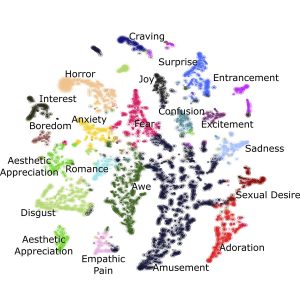
Emoções 😁🥰😭🤬😱
Science Advances 24 Jul 2019 Vol. 5, no. 7, eaaw4358
DOI: 10.1126/sciadv.aaw4358Uma rede neural artificial chamada EmoNet consegue reconhecer 20 emoções humanas em resposta a uma imagem.
-
I Simpósio Sul-Brasileiro de Neurociências – UFSC – Araranguá/SC
#ssbn19 #labioex #laif #ufsc
-
[Humor] Veggies

-
The Role of PGC-1α/UCP2 Signaling in the Beneficial Effects of Physical Exercise on the Brain
Front. Neurosci., 29 March 2019
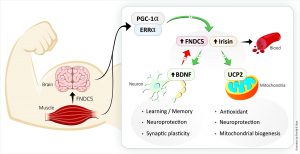
In understanding the pathology of neurological diseases, the role played by brain energy metabolism is gaining prominence. Animal models have demonstrated that regular physical exercise improves brain energy metabolism while also providing antidepressant, anxiolytic, antioxidant and neuroprotective functions. This review summarizes the latest evidence on the roles played by peroxisome proliferator-activated receptor gamma (PPAR-γ) coactivator 1-alpha (PGC-1α) and mitochondrial uncoupling protein (UCP) in this scenario. The beneficial effects of exercise seem to depend on crosstalk between muscles and nervous tissue through the increased release of muscle irisin during exercise.
Link https://doi.org/10.3389/fnins.2019.00292
-
The exercise sex gap and the impact of the estrous cycle on exercise performance in mice
Scientific Reportsvolume 8, Article number: 10742 (2018)
Exercise physiology is different in males and females. Females are poorly studied due to the complexity of the estrous cycle and this bias has created an exercise sex gap. Here, we evaluated the impact of sexual dimorphism and of the estrous cycle on muscle strength and running power of C57BL/6 mice. Like men, male mice were stronger and more powerful than females. Exercise-induced increase of O2consumption (VO2) and CO2 production (VCO2) were equal between sexes, indicating that running economy was higher in males. Thermoregulation was also more efficient in males. In females, proestrus increased exercise VO2 and VCO2 at low running speeds (30–35% female VO2max) and estrus worsened thermoregulation. These differences translated into different absolute and relative workloads on the treadmill, even at equal submaximal VO2 and belt speeds. In summary, our results demonstrate the better muscle strength, running power and economy, and exercise-induced thermoregulation of males compared to females. Proestrus and estrus still undermined the running economy and exercise-induced thermoregulation of females, respectively. These results demonstrate an important exercise sex gap in mice.
Link https://www.nature.com/articles/s41598-018-29050-0
-
Research Topic: Exercise Shapes up Brain Health
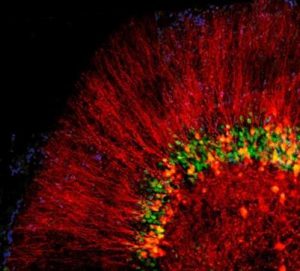
Aberto para submissões
Deadline 16/9/19
Tópico da Frontiers Neuroscience com Prof. Aderbal como editor. O foco é a neurobiologia do exercício físico, principal linha de pesquisa de nosso grupo LaBioEx.
Link https://www.frontiersin.org/research-topics/8793/exercise-shapes-up-brain-health